
In a survey, 74% of respondents stated that they believed they weren't able to reach their maximum potential at work due to a lack of opportunities.
If you don't set smart goals for training, you'll likely miss the mark on what you want to achieve.
Without specific, measurable, attainable, relevant, and time-bound goals, your training will be less effective and you'll be more likely to get discouraged.
You need to have an idea of what success looks like in order to achieve it.
Otherwise, you're just going through the motions without any real direction.
Wondering how to set smart goals for training? Look no further.
Here's a complete guide to setting smart goals for training.
What Are SMART Goals?

SMART goals are ones that are specific, measurable, attainable, relevant, and time-bound.
This acronym is a helpful guide for goal setting because it ensures that your goals meet all of these criteria.
1.Specific
Specific goals are those that are clear and concise. You know exactly what you want to achieve and can easily articulate it to others.
2. Measurable
Measurable goals have tangible markers that you can use to track your progress.
3. Attainable
Attainable goals are those that challenge you but are still within the realm of possibility.
4. Relevant
Relevant goals align with your overall mission and help you move closer to your long-term vision.
5.Time-Bound
Time-bound goals have a deadline attached to them so that you can stay on track and not get sidetracked by other commitments.
Setting SMART goals is an important part of any successful endeavor because it helps you stay focused and motivated as you work towards achieving your objectives.
By taking the time to set well-defined goals, you increase your chances of achieving them exponentially.
How To Set SMART Goals For Training
.png)
Setting goals is an important part of any training program, but it can be challenging to know what kind of goals to set.
That's where the SMART goal-setting system comes in.
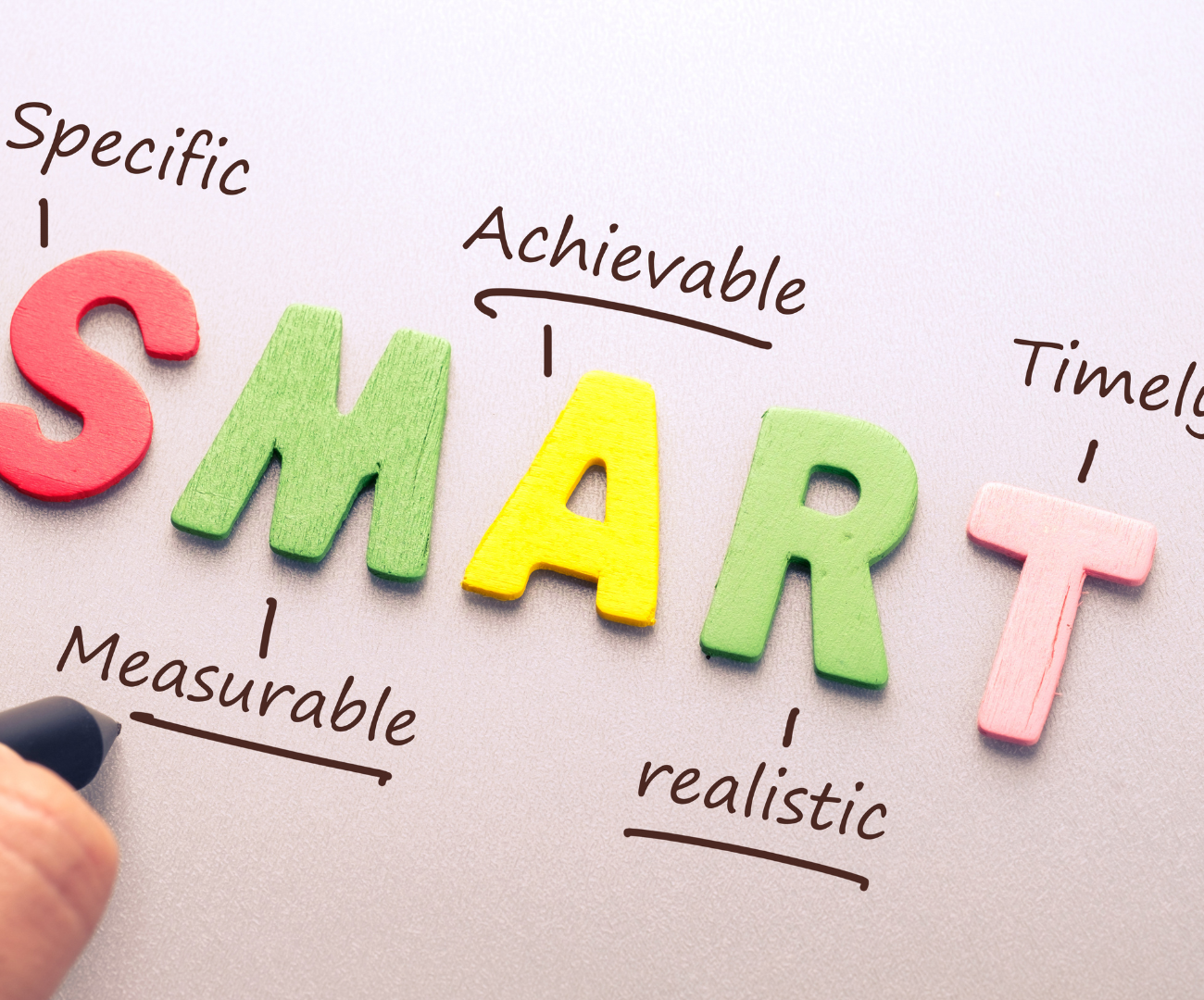
SMART is an acronym that stands for Specific, Measurable, Achievable, Realistic, and Time-bound.
Keep these five criteria in mind when setting SMART goals for training, and you'll be well on your way to achieving them.
1. Be Specific
When it comes to setting goals for training, it is important to be specific.
This means that you need to have a clear idea of what you want to achieve and how you plan on achieving it.
Without specific goals, it can be challenging to measure progress and determine whether or not your training is effective.
There are a few things to keep in mind when setting specific goals for training.
-
Consider What You Aim To Accomplish
First, consider what you hope to accomplish.
Are you trying to improve your overall fitness level? Or are you aiming for something more specific like increasing your strength or improving your endurance?
-
Start Setting Goals
Once you know what you want to achieve, you can begin to set goals that are realistic and achievable.
-
Set Small Milestones
It is also important to remember that not all goals need to be big or lofty.
Sometimes the best way to make progress is by setting small, manageable goals that you can gradually work towards.
-
Draft A Clear Plan
No matter what kind of goal you set, the important thing is to have a clear plan for how you will achieve it.
By being specific and detailed in your planning, you can increase your chances of success and reach your training goals.
2. Make Sure The Goals Are Measurable
When it comes to setting goals for training, it is important to make sure that they are measurable.
This means that you should be able to track and assess your progress toward them.
-
Common Ways To Track Progress
There are a few different ways to do this, but some of the most common include using specific metrics or markers, setting deadlines, and breaking down goals into smaller pieces.
One of the most important things to keep in mind when setting measurable goals is what you want to achieve with your training.
This will help guide you in choosing the right metrics to track.
-
Examples Of Goals Of Training
Some training goals examples would be, if you are trying to improve your company’s sales, you might track and compare things like current and future sales.
On the other hand, if you are trying to develop a new skill in your employees through training, you might track how quickly and efficiently they can complete a task or how many errors they make.
3. Set Achievable Goals
Setting achievable goals for employee training can seem like a daunting task, but it doesn't have to be.
By taking some time to consider the objectives of the training, as well as the level of experience and expertise of your employees, you can set goals that are both realistic and challenging.
-
Set Simple, Attainable Goals
One way to start is by setting simple, attainable goals for each employee.
For example, if you're providing customer service training, you might set a goal for each employee to learn at least three new customer service techniques.
If you're providing sales training, you might set a goal for each employee to make at least one sale during the training period.
-
Look At The Big Picture
Another way to approach goal setting is by looking at the big picture.
What do you want your employees to be able to do after they've completed the training?
Do you want them to be able to handle customer complaints more effectively?
Do you want them to close more sales?
Once you've identified what you want the overall outcome of the training to be, you can start setting goals that will help you achieve that.
4. Take A Realistic Approach
It is essential for businesses to set realistic goals for employee training.
-
Benefits
By doing so, businesses can ensure that their employees are properly prepared for the tasks they will need to perform and that they understand what is expected of them.
Furthermore, setting realistic goals can help to motivate employees and keep them on track.
-
Consider Training Needs
When setting goals for employee training, businesses should consider the specific skills that their employees will need to learn and the timeframe in which they need to learn them.
-
Consider The Available Resources
Additionally, businesses should ensure that their goals are achievable and that they have the resources available to meet those goals.
-
Communicate The Goals
Finally, it is important to communicate the goals of the employee training program to all involved parties so that everyone is on the same page.
5. Add A Time Frame To Your Goals
Setting time-bound goals for employee training can help ensure that employees are able to complete the training in a timely manner and that they are able to retain the information that they have learned.
There are a few things to keep in mind when setting these types of goals.
-
Determine The Format
First, you will need to determine how long the training will take and what type of format it will be in.
Will it be an online course, or will employees need to attend a class?
Once you have determined the format, you can then set a goal for how long it should take employees to complete the training.
-
Examples Of Goals Of Training
As a training goal example, consider if you are offering an online course, you may want to set a goal of two weeks for employees to complete the course.
If you are offering a class, you may want to set a goal of one month for employees to complete the class.
-
Set A Timeframe
You will also need to consider how much time employees have available to dedicate to training.
If they are only able to dedicate an hour or two per week, then you may want to extend the timeframe for completing the training.
-
Set Realistic And Achievable Goals
Lastly, you will need to make sure that your goals are realistic and achievable.
Employees should not feel overwhelmed by the task at hand, and they should be able to see the finish line in sight.
By setting time-bound goals for employee training, you can help ensure that employees are able to complete the training successfully and in a timely manner.
By following these steps, you can set SMART goals for training.
Why Is It Important To Have SMART Goals For Training And Development
It's important to have SMART goals for training and development because they can help you stay on track and make the most of your time.
Without a goal, it can be easy to get sidetracked or to waste time on activities that don't contribute to your overall objectives.
Smart goals are specific, measurable, attainable, relevant, and time-bound.
This means that they are clearly defined and you can track your progress toward them. They should also be achievable within the timeframe that you set.
Finally, they should be relevant to your larger goals and aligned with your values and priorities.
Setting SMART goals for training and development can help you get the most out of your training by keeping you focused and motivated.
It can also help to ensure that your time and effort are spent in ways that will best help you achieve your long-term objectives.
Train Your Employees With Oreed
You can now fulfill your employees' training needs with Oreed’s all-in-one LMS platform.
With Oreed,
- You can have a 360-degree level of understanding of your employees.
- This will help you gauge their training needs and better understand the areas they require training.
- Once you have sufficient information about your employees, you can make evidence-based decisions about future training/courses.
- Not only will you be able to understand your employees’ needs but you will also be facilitated with tailor-made training and courses.
- Moreover, you will be able to measure the effectiveness and impact of the training and courses.
Promote lifelong learning through Oreed by experiencing the most powerful all-in-one training and development intelligent platform that streamlines all your organization's learning, training, and development activities in one place.
So what are you waiting for? Book a demo with Oreed today and get a walk of all that we have to offer to enhance your training and development programs.
Final Thoughts
Once you've set some specific, measurable, achievable, relevant, and time-bound goals for employee training, you can begin to develop a plan for how those goals will be met.
Keep in mind that employee training is an ongoing process and that your goals may need to be adjusted as circumstances change.
FAQs
1. What is an example of a training goal?
An employee might set a goal to complete a certain number of training modules within a specified time period.
Alternatively, an employee might set a goal to achieve a certain level of proficiency in a particular skill.
Training goals can be specific to an individual or they can be general goals that apply to all employees in a particular department or organization.
2. What are the 4 main objectives of training?
There are four main objectives that businesses hope to achieve through employee training:
- To develop new skills and knowledge
- To improve existing skills and knowledge
- To change attitudes or behavior
- To increase motivation